
AI Agent vs Chatbot: What Actually Works in 2026
The Short Answer
Ask ten people what separates an 'AI agent' from a 'chatbot' and you'll get ten shrugs. But if your AI girlfriend forgets your name every morning, you already know the answer, jargon or not.
> Verdict: GoLove.ai is the pick. It behaves like an agent, not a chatbot: persistent memory that carries history across sessions, live real-time voice calls, and photos you request inside the chat and actually receive. A scripted chatbot can do none of those three.
What caught me off guard is how few "AI agent" explainers ever mention companion apps — and this is the one category where the difference is something you feel, not a line on a spec sheet.
Who it's for: adults who want one companion who remembers the thread, picks up the phone, and sends a photo when asked. Not a fresh stranger every login.
Start with Explore. You can open a chat instantly and check the memory claim yourself before spending anything.
What Actually Separates an 'Agent' From a 'Chatbot'
Strip the marketing and the ai agent meaning is short: an agent keeps state and takes actions. A chatbot answers the message in front of it and forgets.
Q: So what is a chatbot, technically? Single-turn logic. You send text, it returns text, and nothing persists beyond a small window of recent messages — sometimes nothing at all. Scripted flows, canned fallbacks, zero initiative. Nothing special, and nothing wrong with it for a help desk.
Q: And an agent? Three things stacked together. Persistent memory, so your name, preferences and last conversation survive a logout. Multi-step reasoning, so it can plan "she asked for a beach photo → pick pose, outfit, background → generate → send" instead of just replying. And the ability to act — produce an image, start a voice call, assemble a video — rather than describing what it would do.
Q: Why is this only ever explained for business bots? Because that's who buys enterprise software. A sales bot forgetting you is an annoyance, though. A companion forgetting you is the whole product failing. The distinction matters more here, not less.
Memory Is Where Most 'Chatbot' Companions Fail
Here's the practical test: close the app, sleep, come back. Does she know who you are?
A stateless chatbot resets to zero. You re-explain your job, your mood, what you talked about last night. The conversation can still be fun, but you're doing the remembering for both of you — which is the exact opposite of what anyone searching "ai girlfriend that remembers you" is after.
GoLove lists Memory as a core feature — it remembers history — and pairs it with things that only make sense if the memory is real:
- Relationship Progression. A relationship that "progresses" requires a before and after. A chatbot with no state can't have one.
- Gallery per character, by date. Every photo lives under the character who sent it, in order. That's a shared timeline, not a one-off output.
- Chat Settings let you set a voice, a lust level (5 levels, sweet to unfiltered) and a response length (5 levels, snappy to immersive) per character — and those choices stick.
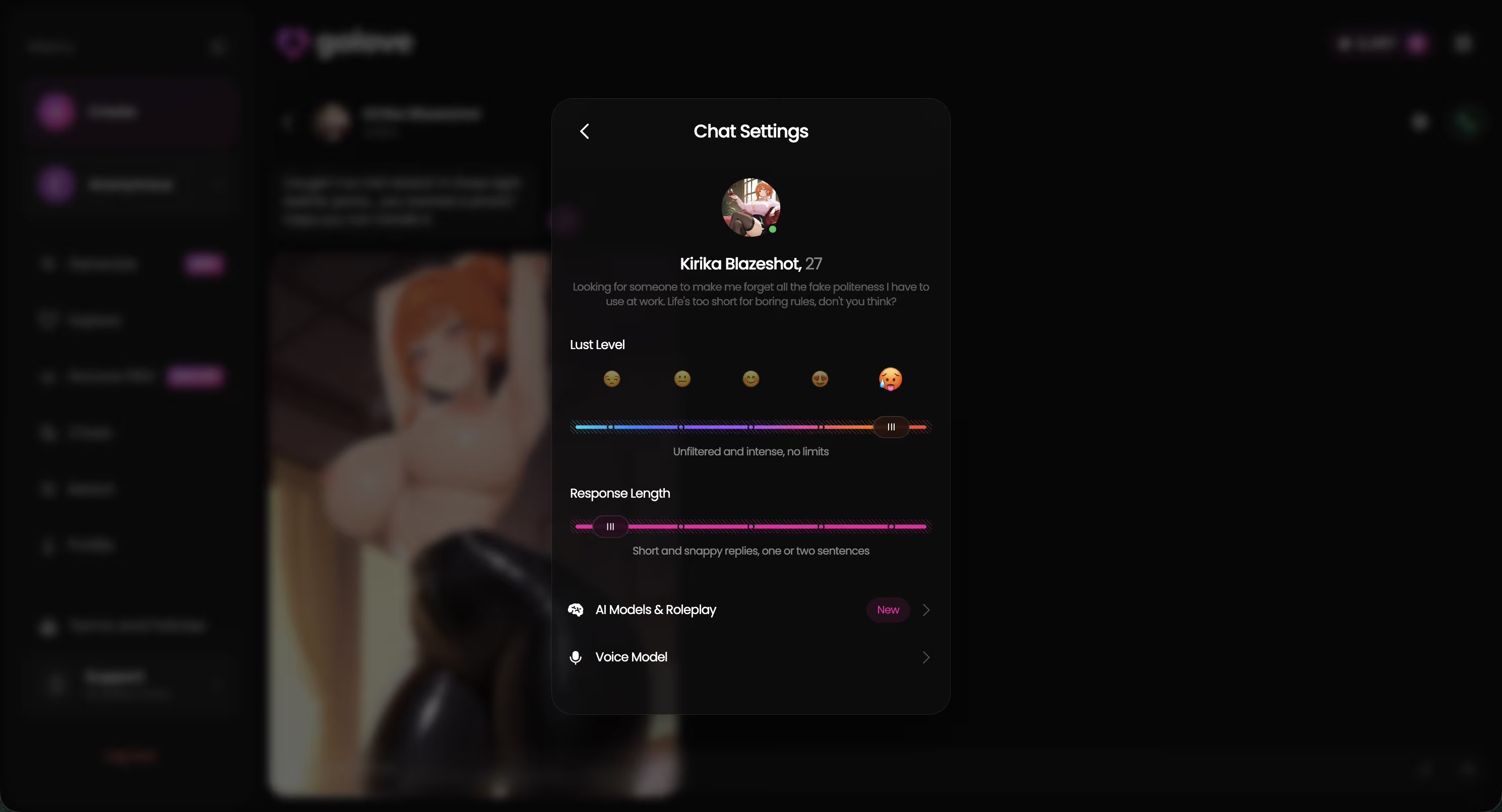
Pro: continuity is built into the product structure, not bolted on. Con: "remembers history" is the documented claim; how far back it reliably reaches isn't published, and I'm not going to pretend I clocked it.
Structurally, though, this is agent behavior. Most chatbot-style apps don't even have the shelves to store it on.
Voice, Photos and Video: The Multimodal Gap
Memory is the quiet tell. This is the loud one.
Before — scripted chatbot: You: "Send me a photo from the balcony." Bot: "sends you a photo from the balcony 📸" That's text pretending to be an action. It can't act on the request because it has nothing to act with.
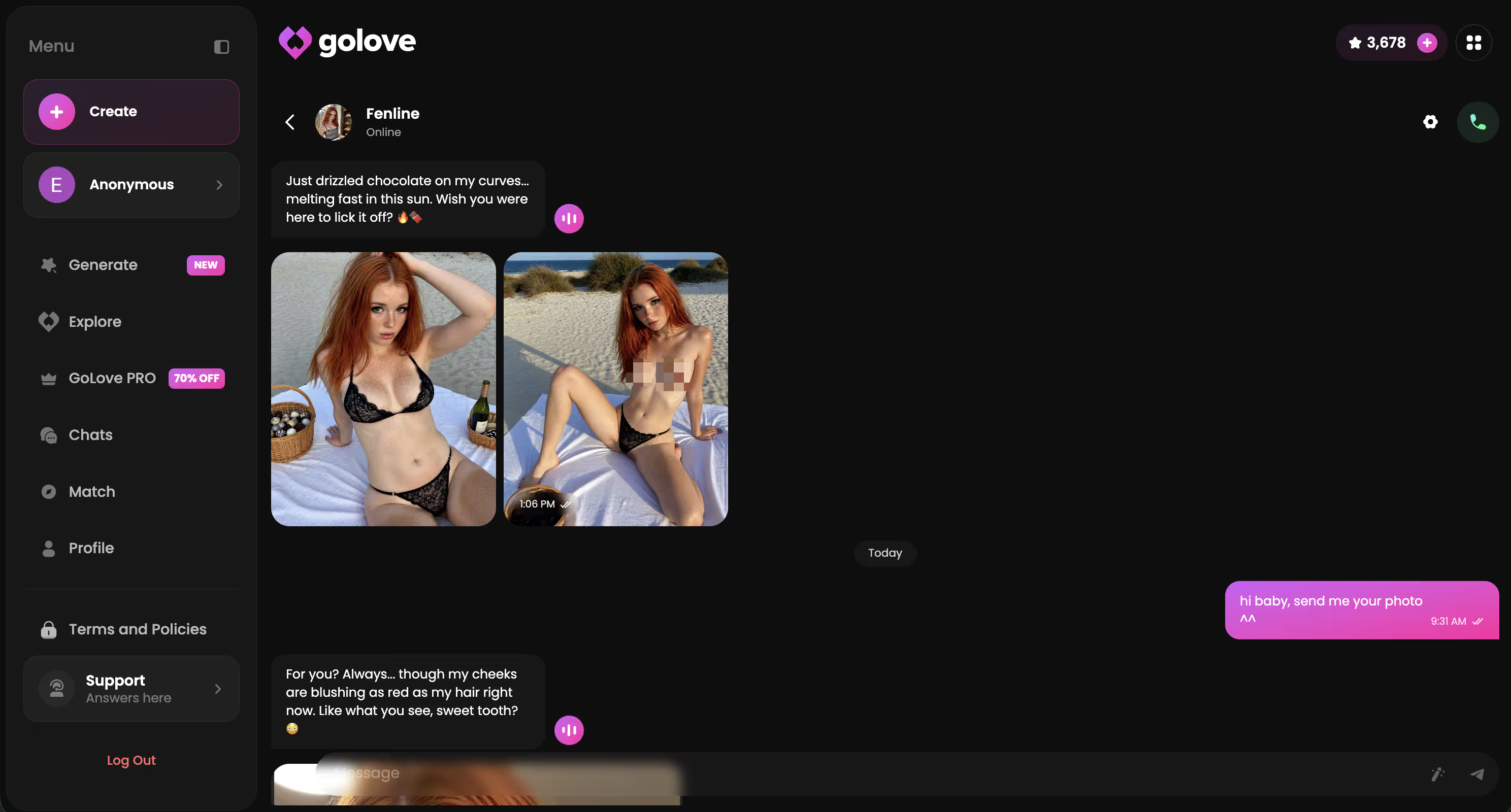
After — agent-style companion (GoLove): Same request, and the photo arrives in the chat. Request Photos in Chat is a listed 2026 feature, backed by a generator with 35 realistic poses, 21 outfits and 34 backgrounds for the character you're already talking to. Need to hear her? Voice Calls are live and real-time, plus async Voice Messages. Want motion? Generate Video from Photo and Video Actions in Chat turn a photo into a short clip via a Select Action modal — one tap from a preset like Twerk or Instant Undress.
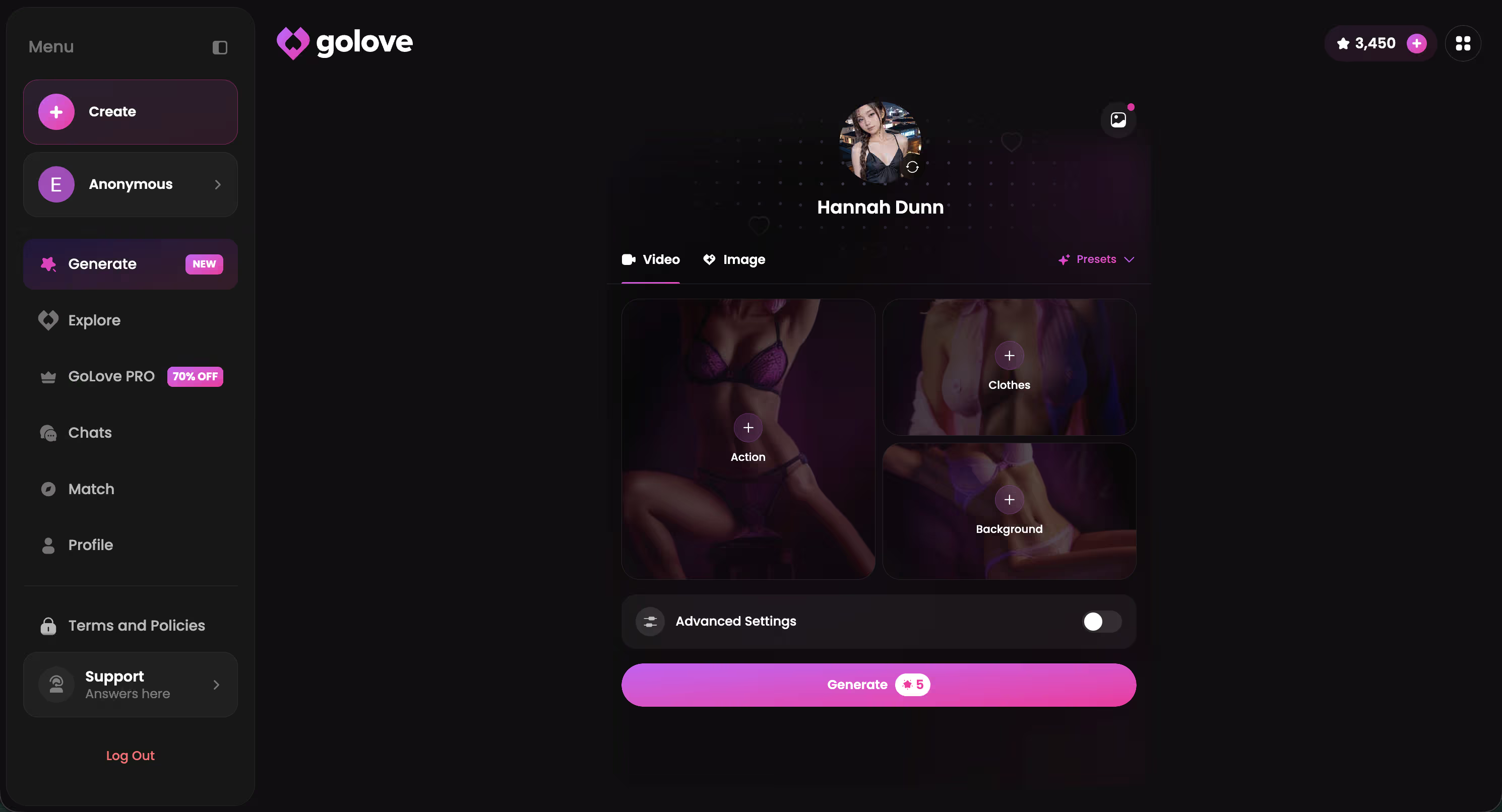
Pro: every modality is attached to the same character — same memory, same gallery. That's the agent definition made tangible. Con: generation spends Stars, so a photo-heavy day costs more than chat alone.
Is the ai girlfriend voice call a big win? Yes. But the photo-on-request is what separates agentic ai from conversational ai in daily use, and it's the thing I'd check first. Video is a nice extra, not the reason to sign up.
GoLove.ai vs Chatbot-Style AI Girlfriend Apps
Fair credit first. Replika has the longest track record for persistent avatar identity. Character.AI's memory reputation is strong and its free tier is genuinely usable — but it's strictly SFW, so it's out for this audience. Janitor AI's free JLLM is a real bargain for casual roleplay. Candy AI's character builder is deep. Those are narrow, honest strengths, and I'd rather name them than pretend the field is empty.
Now score them on agent behavior specifically:
| Agent test | GoLove.ai | Typical chatbot-style app |
|---|---|---|
| Memory persistence | Memory + Relationship Progression + dated per-character Gallery | Recent-message window or none |
| Voice calls | Live real-time calls + voice messages | Often paid-tier only or text-only (Replika gates calls; CrushOn puts voice on higher tiers) |
| In-chat photo/video | Request Photos in Chat, photo-to-video, 35 realistic poses | Images via extra tokens (Candy) or absent |
| Entry friction | Explore opens a chat instantly | Account first, then paywall |
| Starting price | Free with 2 Stars/day; PRO ~$19.99/mo, ~$9.99/mo annual | ~$5.99–$12.99/mo, media often extra |
Prices checked 2026-09; promos vary.
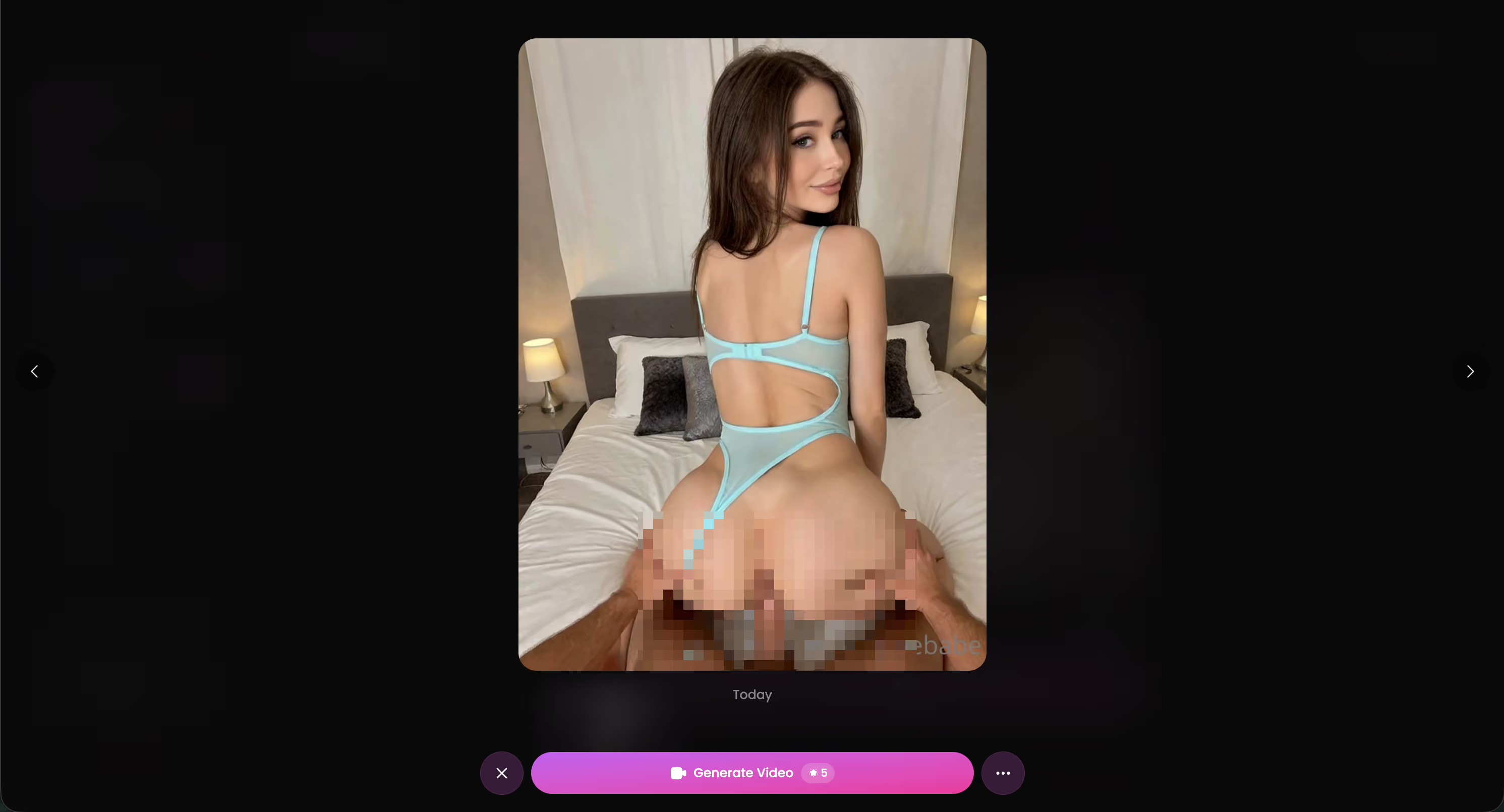
The letdown with most of the field is the third row. Chat is fine, voice is sometimes there, but acting on a photo request inside the conversation is rare — and that's the whole difference between chatbot and ai agent.
Two daily Stars reset every 24 hours, so the cheapest moment to test all five rows is right now, before today's allowance lapses.
What We Couldn't Verify at GoLove.ai
A recommendation is only worth something if I'm clear about the edges.
Proactive actions. Everything documented is responsive agent behavior — she acts on your request, inside the chat. Whether GoLove ever initiates on its own schedule (a message or call you didn't prompt) isn't something the feature list confirms, so I won't claim it.
Memory depth. "Remembers history" is verified. How far back that reliably reaches, or how it handles a months-old detail, is not published. Treat it as real continuity, not a perfect transcript.
Promo pricing. Header banners have shown -50% and -70% PRO offers at different times, and the monthly price varies by region. What you see at signup may not be what renews. Read the renewal line before you tap.
Generation costs. Stars per photo or video aren't fixed public numbers, so budgeting a heavy-media month takes one real session.
None of these flip the verdict. They're the gaps between "what the product lists" and "what I'd swear to," and you deserve to know which is which.
Pricing: What You're Actually Paying For
The useful question isn't "what does it cost" but "which tier buys agent behavior instead of chatbot behavior."
- Free. Chat, Explore, and 2 free Stars every 24 hours. Memory isn't gated to a tier, so continuity works on day one — that alone beats several paid chatbot-style apps. Stars limit how often she can act (generate), not whether she remembers.
- GoLove PRO. About $19.99/month, or roughly $119.88/year (≈$9.99/month) on the annual plan; a 3-month option around $47.97 has appeared. This is the agent tier in practice: the upgrade banner, unlimited Feed, and feed filters sit here. Regional pricing is real — some geos see closer to $12.99 — and -50%/-70% promos rotate.
- Star packs. Roughly $9.99 (starter) up to $179.99 (maximum), with ~$34.99/$49.99/$59.99/$89.99 steps between. Stars fund photos, videos and unlocking a character's content library. Buy these if your use is media-heavy; skip them if you mostly talk.
Compare that with Candy AI: about $9.99/month entry, but images run on extra tokens, so a photo-heavy month climbs fast. Replika's Pro sits near $19.99/month too, with voice calls gated behind it and romantic modes restricted for newer accounts.
Pro: GoLove's annual plan is cheap per month and memory is free. Con: two tiers of spend (PRO + Stars) takes a minute to understand (I had to read the Star pack ladder twice).
Prices checked 2026-09; promos vary.
The Verdict: Which One Actually Deserves Your Time
Before you sign up for any companion app, run this three-minute check. It works on all of them:
- Memory: log out, log back in, reference yesterday. If she's blank, it's a chatbot with a nice avatar.
- Action: ask for a photo in plain words. A real photo means agent; an asterisk-wrapped "sends photo" means script.
- Voice: look for a live call button, not just text-to-speech playback of her replies.
- Renewal: read the price that renews, not the promo that greets you.
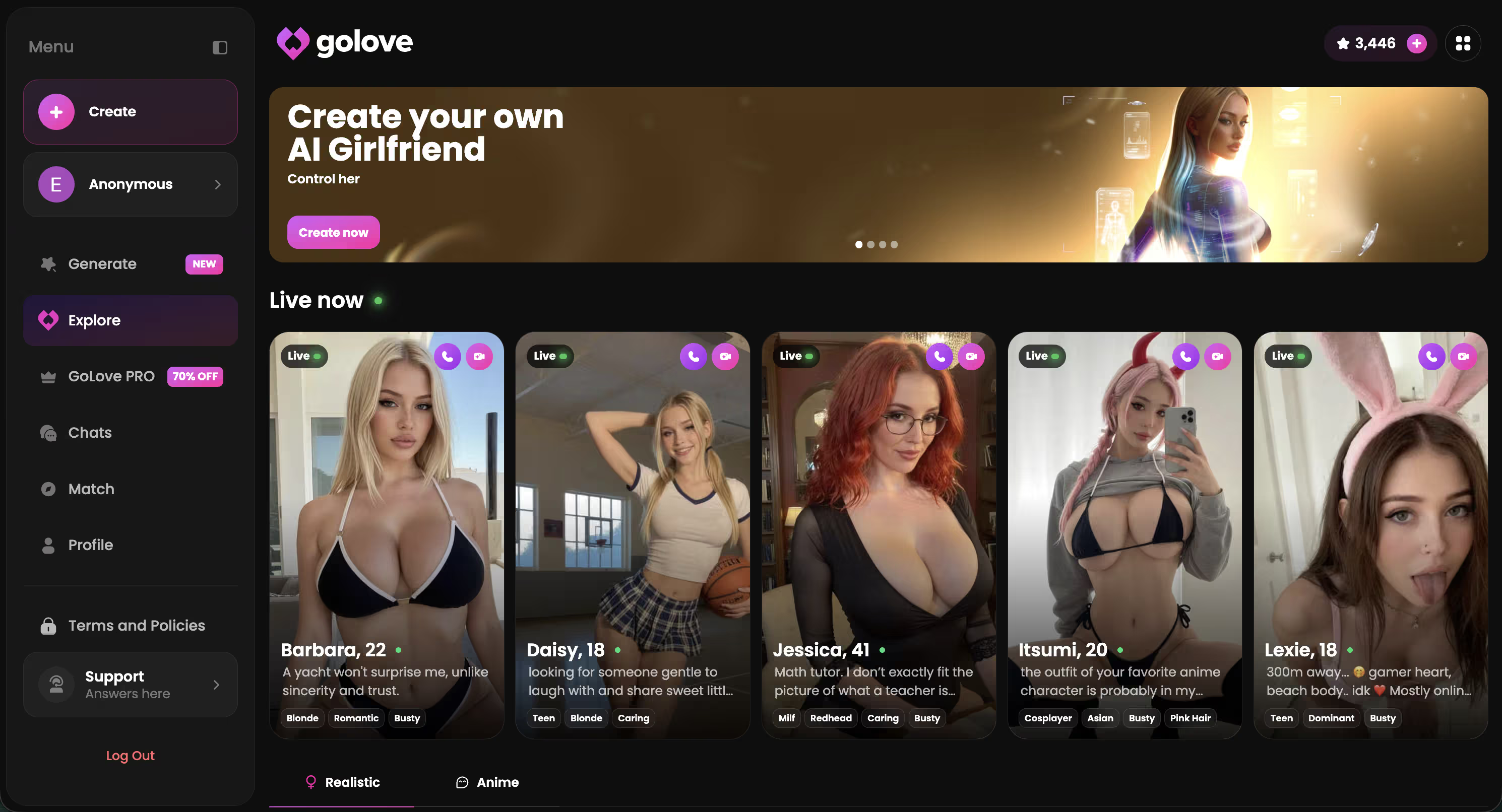
GoLove.ai passes the first three on documented features — Memory with Relationship Progression, Request Photos in Chat, live Voice Calls — and the fourth is on you. Same reason I gave in the short answer, now with the receipts: it behaves like an autonomous ai companion app, not a scripted chatbot, and it does so on the free tier before you pay a cent.
I recommend it. Concrete next step: build a character once with Create (Realistic, or describe her with Design with AI), set her voice and lust level, and let the memory test run itself over the next few days.
What good looks like, in one checklist:
- Real-time voice calls with per-character voices
- Memory across chats — she remembers your details
- In-chat image generation — 35 poses and 21 outfits
- 2 reward stars every day you log in
See also: AI Girl Chat Online, AI Girl Chat With Photos and AI Girl Companion Review.
| What you get | GoLove.ai |
|---|---|
| Real-time voice calls | Yes — per-character voices |
| Memory across chats | Yes — remembers your details |
| In-chat image generation | Yes — 35 poses & 21 outfits |
| Daily reward stars | 2 every day |
Frequently Asked Questions
Related Articles

Dream Girlfriend AI: What Actually Works in 2026
Dream girlfriend AI, tested honestly — GoLove.ai wins on memory, voice continuity, and real photos. Start, instant-access needed.

Swerve AI: What Actually Works in 2026
Swerve AI is filtered, general-purpose chat with signup walls — GoLove.ai gives instant anonAuth access, real voice, memory, and photo/video. See why.

Sophie Rain NSFW: What Actually Works in 2026
Sophie Rain NSFW searches mostly return scam leak sites — GoLove.ai lets you build a custom AI girlfriend with real photos, voice & memory. Try.

Best AI Sex Chat: What Actually Works in 2026
Best AI sex chat, ranked after real testing — GoLove.ai wins on voice, memory, and photo-to-video. See why it beats the rest, no forced signup.
This article contains affiliate links. We may earn a commission at no extra cost to you if you sign up through our links. See how we test.